Shrewsbury
6th Form biology expedition to Mexico – July 2026


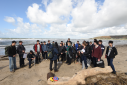
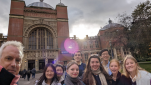
On the morning after Speech Day, twenty-four A-level biologists and three members of staff flew to the Yucatan peninsula, Mexico.
The purpose of the trip was to participate in a two-week biology expedition with Operation Wallacea, with the first week spent terrestrial surveying in the Calakmul Bioreserve (near the Guatemala border). Pupils were involved in bird, mammal, bat, butterfly, herpetofauna and habitat surveys – developing techniques that were used to monitor the biodiversity and distribution of species.

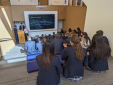
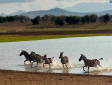
Work involved dawn surveys, lunchtime and evening lectures and evening transects by head torch, that often went on late into the night. Our pupils worked closely with inspiring research scientists from around the world, helping them collect data; appreciating their dedication and learning from their expertise. A day trip to the incredible Mayan ruins allowed us to better understand the landscape and how the climate-threatened ‘aguadas’ (natural limestone ponds) support all life in the region (in the absence of any rivers or lakes).

Suffice to say ‘Jungle Fever’ gripped those who allowed the forest to embrace them (including bucket showers and getting used to the resident tarantulas and scorpions!). An unforgettable week culminated in the Mexico-England World Cup game being livestreamed, via satellite, into a wooden hut in the jungle! Congratulations to Tom P (I) and Esla L (M) who were crowned King and Queen of the Jungle, respectively, for their application, enthusiasm and going above and beyond with all that they did.
For the second week we travelled across to the marine site at Akumal, where pupils participated in a Reef Ecology course, either learning to scuba dive or developing marine ecology surveying and data collection techniques on the reef. Akumal means ‘place of the turtle’ and it didn’t disappoint, with Hawksbill, Loggerhead and Green turtle ever-present companions on our dives. The course was supported with an evening lecture series, where pupils gained a deeper understanding of the supporting benthos and fish biodiversity.
Despite 71% of our planet being blue and 1 billion people relying directly on it for food, very little is known about our oceans. Indeed, although 32 of the 34 animal phyla inhabit coral reefs, we know more about the surface of the moon! A highlight of this second week was the opportunity to contribute to ongoing coral identification work, which feeds into a global database on reef health. Congratulations to Henry K (S) and Mya B (G) who were crowned King and Queen of the Ocean, respectively, for their engagement, enthusiasm and impressive diving skills. Also, Noni M (M) who was recognised as a star participant by the Operation Wallacea staff.

Indeed, every pupil who participated in the expedition was absolutely fantastic – it was a pleasure to be in their company and they were a real credit to the school. I said as much at our farewell dinner on our final evening. We all learnt so much in so many ways and have made memories that will last a lifetime. For many it will have lit a fire for further academic research and field work, not to mention a thirst for further travel and adventure. I would also like to thank my colleagues Dr. Aislinn Currie-Jordan and Dr. Richard Case for their support and help in ensuring that it ran smoothly and making it the huge success that it was. Planning for the Summer 2028 expedition has already begun...
Mr Jonathan Turney, Biology